
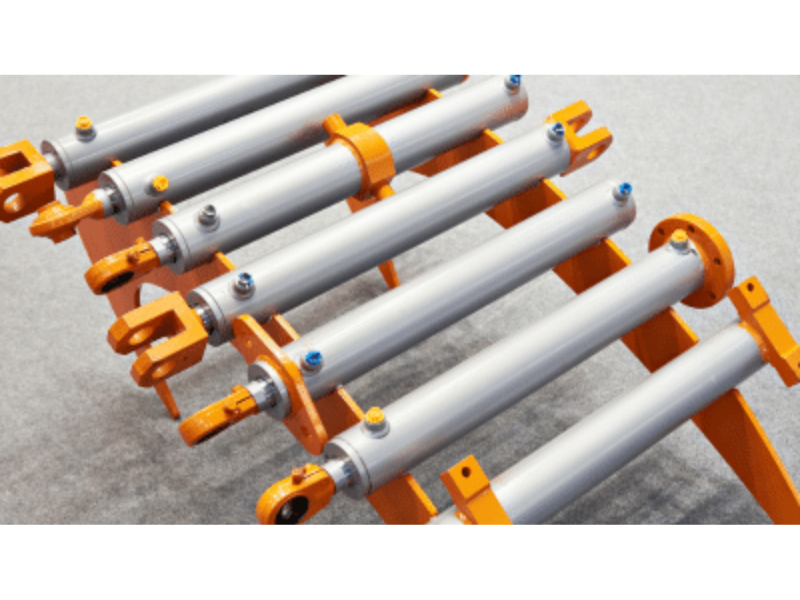
Material selection for linear actuator construction directly affects the service life of the components. It also influences corrosion resistance and wear characteristics over time. The choice of materials determines whether cylinders can handle harsh environments, heavy loads, and demanding duty cycles for years or fail earlier than expected. Understanding material properties guides specification decisions. Technical resources, including material specification guidance covering steel alloy selections for barrels, chrome plating specifications for rods, elastomer compound choices for seals, bronze compositions for bushings, and protective surface treatments that collectively determine cylinder longevity under specific operating conditions.
Steel alloy choices
These alloys have a tensile strength of 100000 PSI when quenched and tempered. Since 1026 and 1045 are lower cost grades of carbon steel, they are suitable for moderate pressure applications. Material specifications from northernhydraulics.net industry standards define the minimum mechanical properties to ensure sufficient safety margins. Corrosion-resistant stainless steel is excellent in marine environments, food processing, or chemical exposure, where carbon steel would deteriorate quickly. The hardness of the material affects wear resistance as harder steels provide better protection against abrasion from contaminated hydraulic fluid or external damage. Grain structure consistency from quality steel production prevents inclusion defects that become crack initiation points under cyclic loading. The steel quality directly correlates with cylinder reliability as material defects cause premature failures regardless of design adequacy.
Seal compound selection
Elastomeric seal materials control the range of temperatures in which they can work. They also determine how well the material resists chemicals. They affect the expected lifetime of the seal in service.
- Polyurethane provides superior abrasion resistance for contaminated environments
- Nitrile rubber offers petroleum fluid compatibility with wide availability
- Fluorocarbon resists heat and chemicals in demanding industrial processes
- PTFE composites minimise friction for precision positioning applications
- Polyether urethane resists hydrolysis in water-based fluid systems
Temperature ratings of seal materials can vary greatly. Nitrile can operate in conditions from minus forty degrees Fahrenheit up to two hundred fifty degrees Fahrenheit. Fluorocarbon is able to tolerate temperatures ranging from minus fifteen degrees Fahrenheit to four hundred degrees Fahrenheit without damage.
Surface treatment protection
Protective coatings and surface treatments help cylinders last longer in environments that cause corrosion or in applications where there is heavy wear. Steel surfaces are coated with phosphorus coatings to prevent corrosion. As a result of these coatings, corrosion resistance is provided. In addition, they improve how well paint adheres to metal.
- Black oxide treatments provide mild corrosion resistance with minimal dimensional change
- Nickel plating creates barrier protection against chemical exposure
- Ceramic coatings offer extreme hardness, resisting severe abrasion
- Anodising aluminium components produces corrosion-resistant oxide layers
- Galvanising provides sacrificial zinc protection for outdoor applications
Surface preparation quality critically affects coating adhesion, where contamination or improper cleaning causes premature coating failure. The protective treatments substantially extend service life in harsh environments, justifying additional cost through reduced replacement frequency. Materials used in hydraulic cylinders determine how long they last and how well they perform. Steel alloys provide the necessary structural strength for the cylinder body and withstand heavy loads. During repeated use and exposure to harsh conditions, chrome plating protects the rod surface from wear and damage.