
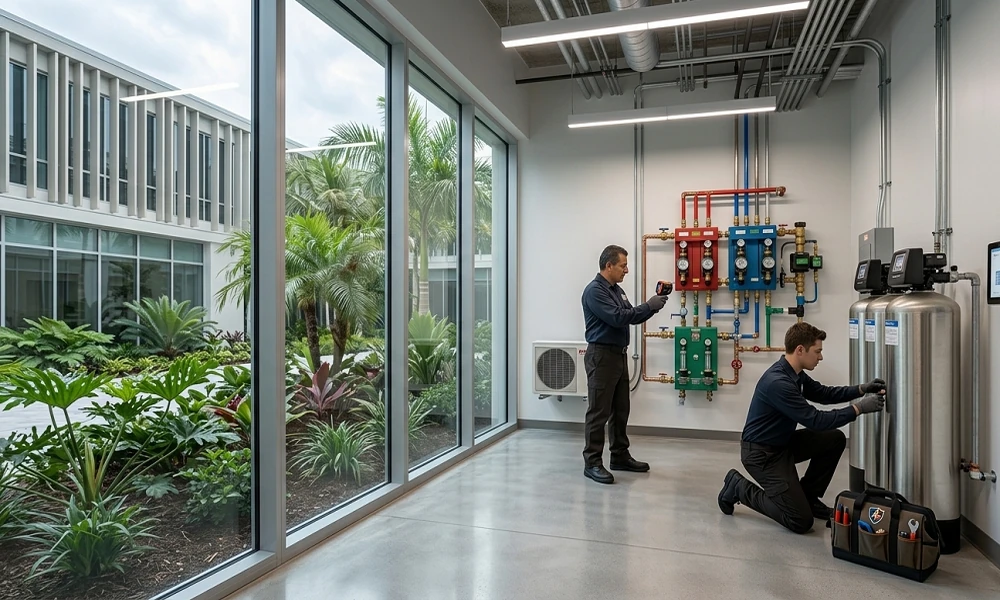
Commercial plumbing systems support nearly every part of a business. Restrooms, kitchens, utility rooms, mechanical areas, and water lines must work each day reliably. When a pipe leaks or a drain backs up, the problem can affect employees, customers, tenants, equipment, and operating hours.
For this reason, commercial property owners should plan repairs before small warning signs become serious disruptions. A preventive maintenance program also helps businesses understand the condition of their plumbing systems and make better decisions about future work.
Why Commercial Plumbing Requires a Planned Approach
Commercial buildings usually place greater demands on plumbing than residential properties. A restaurant may have heavy grease and food waste entering its drainage system. An office building may serve hundreds of people each day. A retail center, hotel, or medical facility may rely on multiple restrooms and water fixtures throughout the property.
These systems can develop problems gradually. A slow drain, recurring odor, water stain, weak pressure, or unexplained increase in water use may signal a developing issue. Ignoring these signs can lead to flooding, sanitation concerns, damaged finishes, or an emergency shutdown.
Many commercial plumbers agree that regular inspections are one of the simplest ways to identify problems while repairs remain more manageable. Inspections may include checking exposed pipes, shutoff valves, water heaters, drains, fixtures, and areas with a history of leaks.
Common Repair Needs for Miami Businesses
Local conditions and building use both influence commercial plumbing needs. Older properties may have worn connections, corroded piping, outdated fixtures, or drainage layouts that no longer suit current demand. Newer buildings can also experience issues when fixtures are overused or maintenance is delayed.
Common repair needs include:
- Leaking supply lines and valves
- Clogged or slow-moving drains
- Running toilets and damaged flush components
- Low or inconsistent water pressure
- Water heater problems
- Broken faucets and commercial fixtures
- Sewer line concerns
- Backflow prevention and cross-connection issues
Businesses searching for commercial plumbing services should look for a provider that understands the importance of scheduling, communication, and clean work areas. Repairs should address the source of the problem instead of relying on temporary solutions that may fail again.
Building a Preventive Maintenance Schedule
A useful maintenance plan should reflect the building’s size, age, occupancy, and daily operations. A restaurant may need more frequent drain and grease-related inspections than a small office. A multi-tenant property may require scheduled checks across several suites and shared utility areas.
A basic program can include monthly visual inspections, seasonal fixture checks, drain maintenance, water heater reviews, and annual system evaluations. Property managers should also keep records of previous repairs, recurring trouble spots, shutoff locations, and equipment age.
Water use records can provide another helpful layer of information. The EPA’s commercial facility water-management tools explain how facility managers can assess water use, track consumption, and identify maintenance opportunities. A sudden change in usage may point to a hidden leak or malfunctioning fixture.
Planning Repairs Around Daily Operations
Commercial plumbing repair should be coordinated with the business schedule whenever possible. Work may be planned during evenings, early mornings, weekends, or low-traffic periods. This approach can reduce disruption and give technicians safer access to affected areas.
Before work begins, managers should identify the impacted rooms, notify staff or tenants, protect nearby materials, and confirm where water may need to be shut off. Clear planning is especially important in restaurants, hotels, healthcare facilities, and properties with public restrooms.
Safety and sanitation should remain part of the discussion. Businesses can review applicable OSHA sanitation requirements when planning restroom or water-service work. Professional repairs should leave the area orderly and suitable for normal use.
Choosing a Local Plumbing Partner
Businesses looking for commercial plumbing in Doral often need a provider that can respond to both scheduled maintenance and unexpected problems. The same applies to properties throughout Miami. A dependable plumbing partner should communicate clearly, explain repair options, and understand that every service call affects business operations.
It is also useful to choose a company familiar with the property’s layout and service history. Over time, consistent records can help identify recurring issues, plan replacements, and reduce last-minute decisions.
Protecting Business Continuity
Preventive maintenance cannot eliminate every plumbing emergency, but it can make many problems easier to identify and manage. Planned inspections help property owners prioritize work, protect valuable spaces, and reduce avoidable interruptions.
For businesses that need dependable commercial plumbing repair, WM Plumbing can help evaluate current concerns and plan practical next steps. Visit WM Plumbing to learn more about service options for commercial properties in the Miami area.
FAQs
How often should a commercial plumbing system be inspected?
Most businesses benefit from routine inspections at least once or twice a year. High-use facilities may need more frequent checks based on occupancy, equipment, and previous problems.
What are early signs of a plumbing problem?
Slow drains, unusual odors, water stains, low pressure, recurring clogs, noisy pipes, and unexplained water use can all indicate a developing issue.
Can plumbing repairs be completed outside business hours?
In many cases, scheduling depends on the type of work, building access, and technician availability. Discussing operating hours in advance can help reduce disruption.
Why is preventive maintenance important?
It helps identify wear, leaks, and drainage concerns before they cause larger damage or interrupt normal business activity.
When should a business call a plumber?
A business should seek professional help when a leak, blockage, loss of water pressure, sewage concern, or recurring plumbing issue affects safety, sanitation, or daily operations.