
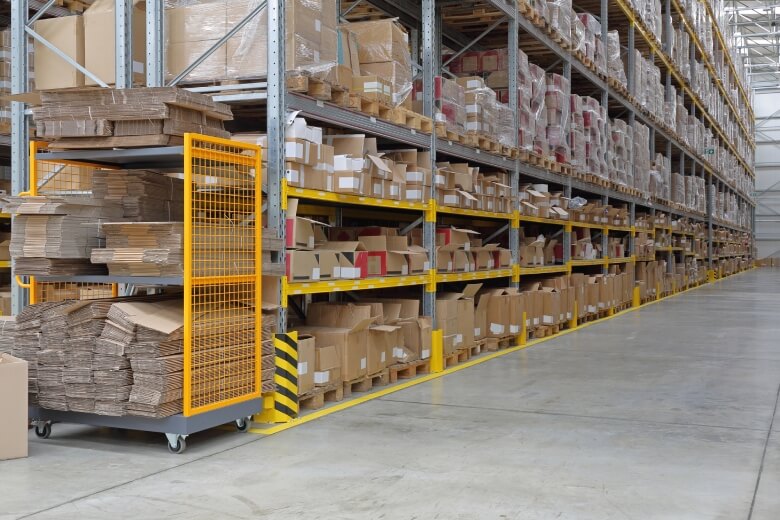
The heavy duty storage rack stands as one of those understated engineering achievements that quietly undergirds modern commerce, a structure so commonplace in industrial zones that we rarely pause to consider its significance or the physics that prevents thousands of kilograms from crashing to the warehouse floor. Yet examine these systems closely, and you discover they represent a particular kind of human adaptation to the problem of gravity, space, and the ever-increasing weight of material goods that our species produces and must somehow store.
The Architecture of Load Bearing
Consider what happens when you stack a tonne of automotive parts on a steel beam suspended four metres above the ground. The beam must resist bending, the uprights must prevent buckling, and the connections must hold firm against forces that would tear lesser structures apart. This is not hypothetical. Every heavy duty racking system in operation performs these calculations in real time, every hour of every day, through the material properties of steel and the geometry of structural design.
The components that make this possible reveal a sophistication born from necessity:
Cold-Rolled Steel Uprights
Formed from sheets that have been worked at room temperature, compressing the grain structure and increasing tensile strength. The process is energy-intensive, but the resulting material can bear loads that would deform hot-rolled alternatives.
Box Beam Design
Hollow rectangular sections that distribute stress more efficiently than open channels, a geometric solution to the physics of bending moments and shear forces.
High-Tensile Fasteners
Bolts manufactured to precise specifications, their metallurgy carefully controlled to ensure they will not fail when subjected to the dynamic loads of daily warehouse operations.
Baseplate Anchoring
Systems that transfer vertical and lateral forces into concrete floors, spreading the load across sufficient area to prevent localised failure.
The engineering here is not ornamental. Singapore’s heavy duty storage rack installations, subjected to regular inspection under the Workplace Safety and Health Act, demonstrate what happens when these systems are properly specified. They endure. When improperly chosen, they fail, sometimes catastrophically.
The Human Appetite for Vertical Space
There is something revealing about humanity’s impulse to build upward. From the ziggurats of ancient Mesopotamia to contemporary skyscrapers, we have consistently challenged gravity’s constraints. Warehouse racking represents a modest version of this ambition, yet the principle remains identical: maximise utility within a limited footprint by exploiting the third dimension.
In Singapore, where land represents perhaps the most precious commodity after water, this vertical imperative becomes acute. An island nation of 730 square kilometres supporting 5.6 million people and serving as a global logistics hub has little choice but to build upward. The heavy duty storage solutions deployed here reflect this geographical reality, engineered to heights that would be unnecessary in nations blessed with abundant horizontal space.
NTL Storage and other providers in this sector have responded to these constraints by developing systems capable of reaching ten metres or higher whilst maintaining load capacities that would have seemed impossible to earlier generations of warehouse designers. The result is a kind of industrial ecosystem optimised for density, where every cubic metre must justify its existence economically.
The Weight of Consequences
The history of warehouse racking includes a darker narrative of failures, collapses, and the injuries and deaths that result when systems are overloaded, damaged, or improperly installed. These incidents, documented in safety reports and investigated by regulatory authorities, provide grim evidence of what occurs when we ignore the physical laws governing heavy duty structures.
A rack system rated for 1,500 kilograms per level does not gradually degrade when loaded to 1,600 kilograms. Instead, it may appear stable for months or years until some minor vibration or impact triggers a cascading failure. The beam gives way, the pallet falls, and the adjacent structure, suddenly subjected to lateral forces it was not designed to withstand, follows suit. Within seconds, a stable system becomes a disaster zone.
This is not theoretical. Singapore’s workplace incident statistics include rack collapses among reported industrial accidents. The investigations that follow typically reveal familiar patterns: inadequate maintenance, missing safety components, overloading beyond rated capacity, or damage left unrepaired due to cost considerations or simple neglect.
The Material Reality of Storage
What strikes one most forcefully about Heavy duty storage racking systems is their materiality, the sheer quantity of steel required to safely support the weight of modern commerce. A medium-sized warehouse might contain 50 tonnes of racking, all of it extracted from the earth as iron ore, refined in blast furnaces, rolled into structural sections, and assembled into frameworks that will bear perhaps 500 tonnes of inventory.
This represents a significant investment of resources and energy, a fact that becomes apparent only when you consider the full lifecycle of these systems. The steel production alone requires substantial carbon emissions. Yet the alternative, spreading inventory across larger floor areas, would demand even greater material and energy expenditure for building construction and operation.
Singapore’s heavy duty storage rack installations thus represent a kind of optimisation, minimising total resource consumption by maximising storage density. It is not that these systems are environmentally benign, but rather that they are less damaging than the alternatives, a distinction that characterises many of our industrial adaptations.
The Engineering of Necessity
In the end, heavy duty racking systems persist because they solve problems that will not disappear. As long as we produce physical goods requiring storage, as long as land remains expensive, and as long as gravity continues to pull downward, we will need structures capable of bearing substantial loads whilst occupying minimal floor space. The Heavy duty storage rack, in its various configurations and capacities, answers these demands with the elegant simplicity of well-applied physics and the accumulated knowledge of a century’s worth of industrial experience.