
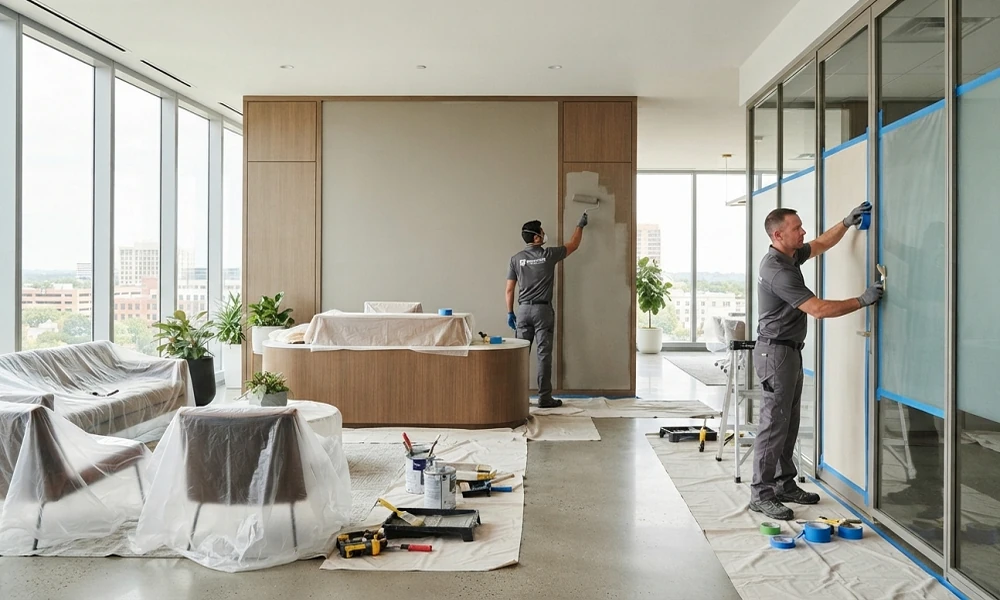
A fresh coat of paint can change how customers, employees, and tenants experience a business. It can make an aging workplace feel professional, reinforce brand identity, and protect surfaces from daily wear. Yet a commercial paint project involves more than choosing an attractive color.
Managers must consider business hours, occupant safety, surface conditions, product performance, and future maintenance. A clear plan helps control disruption while producing a finish that serves the property well.
Start With the Purpose of the Project
Before requesting an estimate, define what the project should accomplish. Some properties need a complete visual update. Others may require targeted work in lobbies, corridors, offices, fitting rooms, or exterior areas.
An experienced contractor should inspect the surfaces and discuss how each space is used. High-traffic zones face scuffs, impacts, fingerprints, and frequent cleaning. Quiet administrative areas may need a different coating system. Establishing these needs early makes the scope easier to understand and compare.
Businesses seeking commercial painting services should provide contractors with information about operating hours, occupied spaces, access limits, sensitive equipment, and desired completion dates.
Give Surface Preparation Proper Attention
Paint performs best on a clean, stable, and properly prepared surface. Applying a finish over dirt, peeling material, moisture damage, or failed patches can shorten its useful life.
Preparation may involve cleaning, scraping, sanding, filling holes, repairing minor cracks, caulking gaps, and priming bare or stained areas. Glossy surfaces may need extra treatment to help the new coating bond. The precise process should reflect the substrate and its condition.
When painting a commercial property, decision-makers should ask what preparation is included in the proposal. A detailed answer often reveals more about the project plan than the number of finish coats alone.
Plan Around Business Operations
Commercial work often takes place while a business remains active. Good scheduling can reduce interference with customers, employees, deliveries, and neighboring tenants.
The project may be divided into phases so only one section is unavailable at a time. Evening, weekend, or low-traffic work may be appropriate where site rules and staffing allow. Contractors should also establish clear plans for equipment storage, daily cleanup, ventilation, and access.
For painting an office building, teams can sequence conference rooms, private offices, reception areas, and shared corridors around employee schedules. Clear notices and realistic drying times help occupants know when they can safely resume normal use.
Select Paint for the Space
Color matters, but product selection also affects appearance, cleaning, durability, and indoor comfort. A polished reception area may call for a different sheen than a stockroom or staff corridor.
Low-sheen finishes can soften wall imperfections, while higher-sheen coatings often tolerate cleaning more readily. The right choice depends on the surface, expected traffic, lighting, and maintenance routine. Product specifications should also be reviewed for drying time and application needs.
The U.S. Environmental Protection Agency explains that volatile organic compounds can affect indoor air quality. Discussing lower-emitting options and ventilation with the contractor can be especially useful in occupied interiors.
Address the Needs of Retail Spaces
Retail interiors must support both presentation and everyday performance. Walls near entrances, checkout areas, displays, and fitting rooms often receive frequent contact. Colors must also work with merchandise, fixtures, and changing lighting throughout the day.
When painting a retail property, the schedule may need to account for customer traffic, inventory movement, promotional periods, and display installation. Careful protection of floors, shelves, counters, and products is essential. Phased work can help keep usable areas open and reduce the impact on sales activity.
Keep Safety and Communication Visible
Commercial projects may involve ladders, lifts, tools, cords, wet coatings, and temporary work zones. The contractor and property representative should agree on access controls, daily working areas, and points of contact before work starts.
The Occupational Safety and Health Administration provides practical ladder safety guidance relevant to workplace planning. Property managers should also communicate building-specific rules, emergency routes, loading procedures, and security requirements.
Regular updates help prevent confusion. A simple daily summary can identify completed areas, upcoming work, access changes, and any newly discovered surface problems.
Review the Proposal Carefully
A useful proposal should identify the areas being painted, preparation steps, products, coat expectations, exclusions, protection methods, schedule, and cleanup responsibilities. It should also explain how changes in scope will be approved.
Price is important, but proposals cannot be compared fairly unless they cover similar work. One bid may include extensive repairs and priming, while another assumes the surfaces are ready for paint. Clarifying these differences before work begins can reduce surprises.
Frequently Asked Questions
How can a business reduce disruption during painting?
Plan the work in phases, identify low-traffic periods, and communicate temporary access changes. Discuss drying time, ventilation, noise, and daily cleanup before scheduling begins.
How should commercial paint colors be selected?
Consider brand identity, natural and artificial light, room size, fixtures, customer expectations, and maintenance needs. Testing samples on the actual surfaces helps show how colors change during the day.
What should be checked during the final walkthrough?
Review coverage, edges, repaired areas, trim, doors, cleanup, and all items listed in the agreed scope. Record any touch-ups clearly before project closeout.
Plan a Finish That Supports the Business
A successful commercial project combines practical scheduling, sound preparation, suitable materials, and consistent communication. These details protect the property while helping the finished space look clean and purposeful.
Contact Bay-Valley Painting, Inc. to discuss the site, operating needs, surfaces, and goals for an upcoming commercial paint project.