
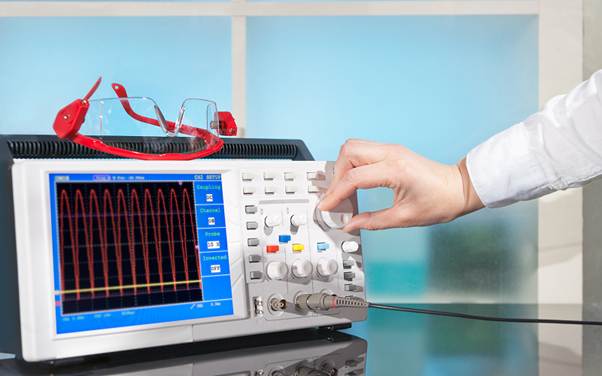
Accurate readings don’t happen by chance, especially in electronics testing. Whether you’re diagnosing a fault, verifying a signal, or logging data for analysis, the way test and measurement equipment is handled makes all the difference. Tools like the oscilloscope require precision, planning, and a fair bit of discipline to deliver reliable outputs. Getting careless can lead to distorted data or even damaged devices.
To support error-free operation and effective diagnostics, here are the do’s and don’ts every technician, engineer or lab supervisor should take seriously when handling test equipment.
Do verify your equipment before starting any test
Never assume your tools are ready just because they are powered on. Always check calibration dates, verify the functionality of probes, and run a quick system test. For oscilloscopes, ensure the time base and voltage settings are configured correctly for the signal range you expect. This pre-check prevents wasted time and skewed results.
Don’t skip the manual or datasheet
Each piece of test and measurement equipment behaves differently, especially across manufacturers or model generations. Overlooking the manual increases the chance of setup mistakes and inaccurate measurements. An oscilloscope, for instance, may have advanced triggering functions or coupling options that, if misused, can completely alter what you’re seeing on-screen.
Do ground your equipment properly
Safety and accuracy both depend on good grounding. Inconsistent or floating grounds introduce noise, resulting in false readings. Ground loops can even damage sensitive devices. When using an oscilloscope, attach the probe ground close to your signal test point to limit the loop area and reduce interference.
Don’t overload the input channels
It’s tempting to connect equipment directly to unknown circuits, but that approach risks exceeding input voltage limits. Never assume your device can handle whatever comes through. Oscilloscopes, for example, may only tolerate up to a certain number of volts without attenuation. Use voltage dividers or attenuating probes where necessary.
Do isolate high-voltage circuits
Before connecting test equipment to high-voltage sources, confirm that proper isolation measures are in place. Isolation transformers, differential probes, or battery-powered oscilloscopes can help reduce risk. Direct measurements without these can be dangerous and can instantly destroy your equipment.
Don’t use damaged leads or connectors
Faulty leads to compromise in both safety and signal integrity. Cracked insulation, corroded connectors, or broken probes can inject noise or lead to short circuits. Every time you set up, inspect all test accessories. With oscilloscopes especially, worn-out BNC connectors or loose tips can completely throw off your measurements.
Do document your setup and readings
In any technical environment, reproducibility matters. Always note your test conditions, instrument settings, and cable arrangements before moving on. This habit helps not only in troubleshooting but also when sharing test reports with clients or team members. Some oscilloscopes offer screenshot functions, use them.
Don’t ignore environmental factors
Temperature, humidity, and EMI (electromagnetic interference) all affect how test equipment performs. A temperature drift can change component behaviour, while nearby power lines or wireless signals might interfere with your oscilloscope readings. Be aware of your testing environment and try to control or account for these variables where possible.
Select equipment that’s suited to the specific task at hand
Not all tools are interchangeable. Using a multimeter where an oscilloscope is required, or vice versa, can result in misleading interpretations. If you’re tracing signal timing or waveform distortion, a basic voltmeter won’t be enough. Invest in and apply the right category of test and measurement equipment to suit the task.
Don’t neglect safety certifications and compliance
Particularly in commercial or industrial applications, test equipment should meet local and international standards for safety and electromagnetic compatibility. Never use uncertified devices in high-risk environments. Check for recognised certifications like CE and IEC, along with appropriate safety ratings, before using any device.
Do update firmware and software regularly
Digital test equipment often relies on embedded systems. Keeping firmware and control software up to date ensures you benefit from bug fixes, improved accuracy, and expanded capabilities. This applies to oscilloscopes, data loggers, and even precision meters.
Avoid basing decisions on just one measurement
In engineering, redundancy matters. Always run multiple passes or use secondary tools to verify your primary readings. Oscilloscopes are excellent for signal analysis, but corroborating voltage levels with a multimeter can validate your test. Using multiple methods to test reinforces the reliability of your findings.
Do store and handle equipment carefully
Test and measurement equipment isn’t indestructible. After use, return items to their protective cases or designated storage. Keep probes coiled, and screens covered, and avoid exposing anything to dust or moisture. Oscilloscopes and signal generators especially benefit from dust-free environments and padded storage.
Don’t assume all probes are the same
Probes vary in impedance, bandwidth, and application. Using the wrong one can load the circuit or fail to capture fast transients. Check compatibility each time you switch tasks. For precise readings, ensure the probe aligns with the oscilloscope’s input impedance and frequency range.
Do consult a professional supplier when in doubt
Trying to patch together a testing setup without clear guidance can lead to underperforming results or long-term issues. If you’re unsure about equipment compatibility or how to measure complex signals, get expert input.
Taking the time to consult professionals not only reduces guesswork but also prevents wasted effort on configurations that won’t deliver dependable data. Whether you’re expanding a lab, updating tools, or troubleshooting inconsistent readings, informed advice makes a measurable difference.
Contact Genetron Singapore to find the right test and measurement equipment or oscilloscope for your specific application.