
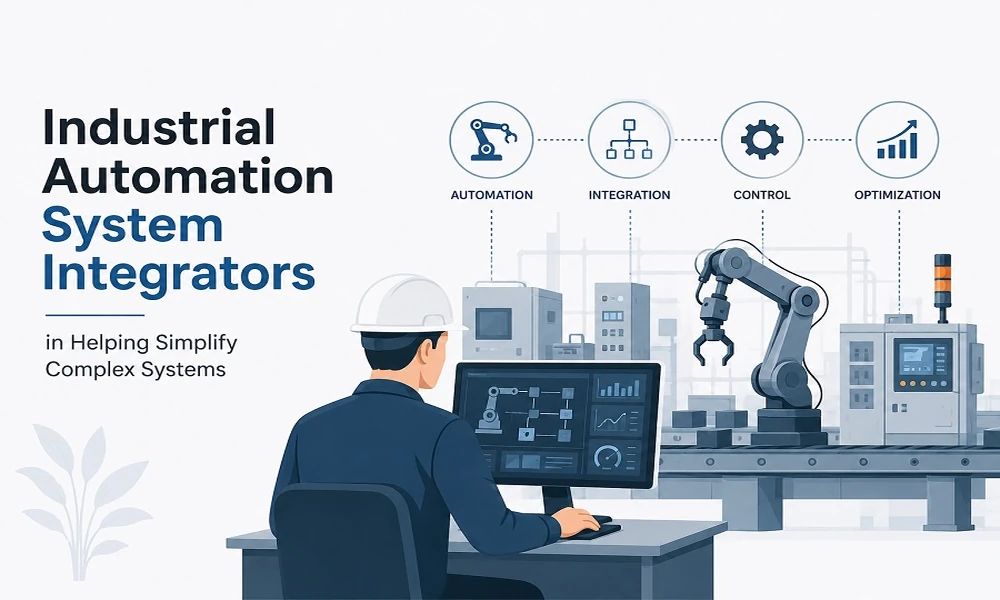
Busy plants can become difficult to manage once machines, sensors, panels, software, safety devices, and production data all start working in separate lanes. Small control gaps may slow output, confuse operators, or make troubleshooting harder than it needs to be. Industrial automation system integrators help bring those moving parts into a clearer structure so the plant runs with better visibility, coordination, and control.
How Integrators Turn Separate Machines Into One Connected System
Many facilities grow over time by adding equipment as production needs change. One machine may use an older PLC, another may rely on a newer control platform, and a third may have its own operator screen with different settings. Without proper integration, workers must manage several systems that do not communicate well.
Skilled control integrators connect those machines through coordinated programming, network design, data sharing, and operator interfaces. This allows equipment to exchange useful information instead of operating like isolated islands. Integrated control systems make it easier for teams to understand line status, machine performance, and process conditions from fewer locations.
Why Clear Operator Screens Reduce Daily Confusion
Operators need fast answers during production. A cluttered screen, unclear alarm, or confusing control layout can slow decisions when a machine stops or a process drifts out of range. Simple, well-organized HMI screens help workers see what matters without hunting through unnecessary menus.
Better screen design also improves training. New employees can learn the system faster when buttons, trends, alarms, and status indicators follow a consistent structure. An experienced integrator in control system design can build interfaces that match how operators actually use the equipment during real shifts.
How Better Data Helps Teams Find Hidden Problems
Production problems are not always obvious from the floor. A motor may slow down at certain times, a valve may respond late, or a sensor may create nuisance alarms that operators quietly work around. Data from integrated control systems can reveal these patterns before they become larger failures.
Accurate information also supports smarter maintenance. Instead of waiting for breakdowns, plant teams can review run time, fault history, temperature trends, cycle counts, and process delays. Industrial control systems companies often help plants turn raw machine signals into practical information that maintenance and production teams can use.
Why Standardized Controls Make Expansion Easier
Growth becomes harder when every production area uses different control logic, wiring methods, screen designs, and documentation styles. A plant may be able to run that way for a while, but scaling up usually exposes the disorder. Standardization helps future upgrades move faster because new equipment can follow an established pattern.
Consistent controls also reduce dependence on one person who knows how everything works. If systems are documented and programmed in a logical way, more team members can troubleshoot, operate, and maintain them. Industrial automation system integrators help create those standards so expansion does not add unnecessary confusion.
How Safety Systems Fit Into the Bigger Control Picture
Safety devices must do more than stop equipment during an emergency. Light curtains, interlocks, emergency stops, safety relays, guards, and safety PLCs should work with the control system so hazards are managed clearly. Poorly connected safety devices can create nuisance shutdowns or leave operators unsure why equipment stopped.
Strong safety integration helps protect workers while keeping production organized. Alarms, reset steps, fault messages, and safety zones can be designed so teams understand the issue quickly. Control integrators know how to build safety functions that support both protection and practical operation.
Why Legacy Equipment Does Not Always Need Full Replacement
Older machines may still be mechanically useful even if their controls feel outdated. Replacing the entire machine can be expensive, especially if the real problem is poor communication, limited data, or aging panels. A thoughtful control upgrade can often extend the useful life of existing equipment.
Modern components can connect legacy equipment to newer plant networks. PLC upgrades, updated HMIs, drive replacements, sensor additions, and communication modules may bring older machines into the larger automation system. This approach can improve reliability without forcing a full equipment replacement.
How Integration Improves Troubleshooting During Downtime
Downtime becomes more stressful when no one knows where the problem started. Operators may check one panel, maintenance may inspect another, and supervisors may wait for updates while production sits still. Integrated systems can shorten that search by showing alarms, machine states, and fault locations more clearly.
Faster troubleshooting protects output and reduces frustration. Technicians can follow better diagnostic information instead of guessing through wires, sensors, and programs. A skilled integrator can design systems that guide teams toward the source of a problem instead of leaving them to piece together scattered clues.
Why Expert Support Matters With Complex Automation
Complex plants need more than individual control parts. They need thoughtful system design, clean documentation, reliable programming, practical operator screens, safe controls, and support for future growth. That kind of planning helps simplify the entire production environment.
RL Consulting works with plants that need help improving integrated control systems, PLC programming, control panel design, automation upgrades, troubleshooting, and system coordination. For facilities comparing industrial control systems companies, RL Consulting brings the technical experience needed to simplify complex automation, connect equipment more effectively, and help production teams work with clearer, more dependable controls.