

Maximizing Creator Revenue: The Power of Recurring Affiliate CommissionsThe Rise of Creator Economy Affiliate Marketing
The creator economy continues its explosive growth, offering incredible opportunities for individuals to monetize their passion and influence. However, for many, the challenge remains: how to move beyond sporadic earnings and build truly sustainable, recurring revenue streams? The answer often lies in understanding and strategically leveraging affiliate marketing.
While one-time referral bonuses can provide a quick boost, the true power for creators emerges from recurring affiliate commissions. These programs transform your efforts into a consistent source of income, rewarding you not just for a single conversion, but for the ongoing value a referred customer brings to a platform. This shift from transactional to sustained earnings is a game-changer for financial stability.
In this comprehensive guide, we will explore affiliate and referral programs, examining how they operate for both customers and partners. We will deconstruct the mechanics behind successful models, drawing insights from the extensive Uber Eats referral program as a prime example of driving viral growth and customer acquisition. Furthermore, we will delve into the critical distinctions between transactional referral models and the long-term potential of recurring affiliate commissions, considering how a robust creator affiliate referral engine can empower you to maximize your earnings. Join us as we uncover how to build a resilient and ever-growing income portfolio in the dynamic creator landscape.
The creator economy, a vibrant ecosystem where individuals leverage their skills and audience to generate income, has witnessed an unprecedented boom. From social media influencers and bloggers to podcasters and digital artists, creators are constantly seeking innovative ways to monetize their content and build sustainable careers. While direct advertising, sponsorships, and product sales remain staples, affiliate marketing has emerged as a particularly potent strategy, especially when it transitions from one-off payments to recurring commissions.
Affiliate marketing, at its core, is a performance-based marketing strategy where a business rewards one or more affiliates for each visitor or customer brought by the affiliate’s own marketing efforts. For creators, this means recommending products or services they genuinely use and trust to their audience. The authenticity derived from a creator’s personal endorsement fosters a high level of audience trust, which is invaluable in driving conversions. Unlike traditional advertising, where brands directly push messages, affiliate marketing leverages the creator’s established relationship with their community, making recommendations feel more organic and less intrusive.
This model allows creators to diversify their income streams beyond reliance on a single platform or brand. By strategically partnering with various businesses, creators can build a resilient financial foundation. The power of a creator’s influence, often cultivated through years of consistent content creation and engagement, can be effectively channeled into driving sales and sign-ups for partner companies. The transparency around these partnerships, typically through clear disclosure, further solidifies the trust creators share with their audience, turning recommendations into genuine value propositions.
Why Platforms are Adopting Creator Economy Affiliate Marketing
For platforms and businesses, embracing creator economy affiliate marketing is a strategic imperative in today’s competitive digital landscape. The reasons are multifaceted, primarily revolving around customer acquisition, retention, and long-term value.
Many modern digital services operate on subscription models, where a customer’s lifetime value (CLV) is paramount. Acquiring a customer is only the first step; retaining them for months or years is where true profitability lies. Creator-driven referrals often bring in higher-quality leads who are more engaged and likely to convert into long-term subscribers or repeat purchasers. This is because the referral comes from a trusted source who has already “vetted” the product or service.
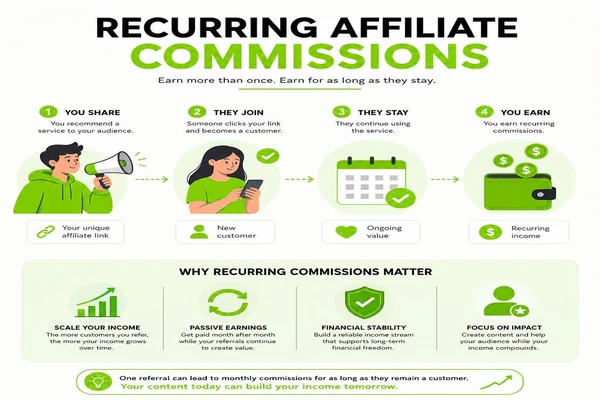
Furthermore, recurring affiliate commissions align perfectly with subscription-based businesses. Instead of paying a flat fee for a one-time sign-up, platforms can reward creators a percentage of the referred customer’s subscription revenue for as long as that customer remains active. This creates a powerful incentive for creators to not only drive initial conversions but also to promote the ongoing value of the service, indirectly contributing to customer retention. It transforms creators into genuine partners in growth, sharing in the sustained success of the platform.
Platforms are increasingly recognizing that traditional advertising costs can be high and less effective than authentic word-of-mouth. A well-structured affiliate program, especially one offering recurring commissions, can significantly reduce customer acquisition costs while simultaneously building a loyal network of advocates. This model allows businesses to scale their marketing efforts efficiently, tapping into diverse audiences that might be difficult to reach through conventional channels. For platforms looking to expand their reach and foster a robust ecosystem of partners, exploring dedicated solutions for their collaborators, such as those offered by Payge.me Affiliates, becomes a crucial step. Such platforms streamline the management of affiliate relationships, ensuring transparent tracking and timely payouts, which are essential for maintaining strong creator partnerships.
How to Build a Sustainable Creator Economy Affiliate Marketing Strategy

For creators aiming to build a sustainable income through affiliate marketing, a thoughtful and strategic approach is essential. It’s not just about slapping a link onto your content; it’s about integration, authenticity, and long-term vision.
Firstly, content alignment is key. The products or services you promote should genuinely resonate with your niche and audience interests. Promoting irrelevant items can erode trust and lead to poor conversion rates. Your audience follows you for specific content, so your recommendations should naturally fit within that context. For example, a gaming streamer would promote gaming accessories or software, not kitchen appliances.
Secondly, transparency and disclosure are non-negotiable. Always clearly inform your audience when you’re using an affiliate link. This isn’t just a legal requirement in many regions; it’s a fundamental aspect of maintaining trust. Your audience appreciates honesty, and knowing that you’re upfront about your partnerships strengthens your credibility rather than diminishes it.
Thirdly, focus on long-term partnerships. While one-off promotions can be lucrative, seeking out programs that offer recurring commissions or have a high potential for repeat purchases is more beneficial for building stable income. These partnerships often involve deeper collaboration and a shared interest in the sustained success of the referred customer.
Finally, continuously analyze your conversion rates and audience engagement. Understand what types of content or calls to action lead to the most successful referrals. Experiment with different approaches, whether it’s dedicated review videos, integrated mentions, or tutorials. Data-driven insights will help you refine your strategy, optimize your efforts, and ultimately maximize your earnings. Building a sustainable affiliate strategy is an ongoing process of learning, adapting, and nurturing your relationship with both your audience and your brand partners.
Deconstructing Referral Mechanics: Lessons from the Uber Eats Referral Program
Referral marketing is a powerful engine for growth, and few companies demonstrate its effectiveness as clearly as Uber Eats. The platform, which generated an estimated $4.8 billion in revenue in 2020, saw a significant portion-approximately 38%-attributed to successful referrals. This statistic alone highlights the immense potential of leveraging existing users to acquire new ones. The Uber Eats referral program serves as an excellent case study in how to drive viral growth, foster customer acquisition, and maintain high user engagement across different user segments.
At its core, referral marketing capitalizes on the human tendency to trust recommendations from friends and family. When a trusted contact suggests a service, the barrier to entry for a new user is significantly lowered. For a platform like Uber Eats, which operates in a competitive market, this organic word-of-mouth marketing is invaluable. It not only brings in new customers but often brings in customers who are more likely to be retained, as they come with a pre-existing positive association. The program’s success lies in its dual-sided incentive structure, rewarding both the referrer and the referred, creating a win-win situation that encourages widespread participation.
How the Uber Eats Referral Program Works for Customers and Delivery Partners
The Uber Eats referral program is ingeniously designed to cater to two distinct user groups: the customers who order food and the delivery partners who fulfill those orders. The mechanics, while similar in principle, are tailored to the specific motivations and actions of each group. This dual approach maximizes the program’s reach and effectiveness.

For Customers: The customer referral program typically offers an incentive for new users to make their first purchase and a reward for the existing user who referred them. For instance, a new customer might receive a discount, such as “$20 off their first order of $25 or more,” when they sign up and apply a friend’s referral code. Once that new customer completes their qualifying order, the referrer then receives a credit, perhaps “$10 credit for an order of $25 or more.” This creates a clear benefit for both parties, making the act of sharing and using a code mutually advantageous. These rewards are designed to encourage initial adoption and subsequent engagement with the platform. Customers often find their personal invite code within the Uber Eats app under their account or promotions section, making it easy to share with friends and family.
For Delivery Partners: The referral program for delivery partners focuses on expanding the workforce, which is critical for meeting demand and ensuring efficient service. Existing delivery partners are incentivized to recruit new drivers or couriers. The rewards for referring delivery partners are often substantially higher than customer referral bonuses, reflecting the greater value of acquiring a new active service provider. For example, a delivery partner might earn a significant bonus, sometimes ranging from “$100 to $1,100,” once their referred friend completes a specific number of deliveries within a set timeframe. The exact amount and conditions can vary significantly by city and region, reflecting local market demand for delivery personnel.
The process for delivery partners involves sharing a unique invite code or link. The referred individual then signs up using this code. The referrer can often track the progress of their referred friend within their Uber Driver app, monitoring when they sign up, complete necessary onboarding steps, and start making deliveries. This transparency helps referrers encourage their friends to meet the required conditions to unlock the bonus. For a more detailed understanding of how these programs function for those on the road, Uber provides comprehensive guides, such as the one titled How Referrals Work for Delivery People, which outlines the steps and conditions for earning.
The key difference lies in the reward structure and the action required. Customers get discounts on orders, while delivery partners get monetary bonuses for successful recruitment and activation of new service providers. Both segments, however, benefit from an easy-to-use system for sharing codes and tracking progress.
Eligibility Requirements, Expiration Dates, and Reward Structures
Understanding the fine print of any referral program is crucial for both referrers and referees. The Uber Eats referral program, like most, comes with specific eligibility requirements, conditions for earning rewards, and often, expiration dates or limitations.
Eligibility Requirements: For customers, the primary eligibility requirement for the referee is typically being a new user to the Uber Eats platform. This means they cannot have previously signed up or placed an order. For referrers, they generally need to be an existing active user. For delivery partners, both the referrer and referee must meet certain criteria. The referrer needs to be an active delivery partner. The referee must be a new delivery partner to the Uber platform (not just Uber Eats, but sometimes Uber Rides as well). They often need to sign up in a specific city or region where the referral offer is active and meet all local requirements for driving or delivering, such as age, vehicle type, and background checks.
Conditions for Earning Rewards: Rewards are almost always “gated,” meaning they are only paid out after a specific action is completed.
- For customers: The referred new user must complete their first order, often with a minimum spend requirement (e.g., “$25 or more”). The referral code must be applied at checkout.
- For delivery partners: The referred new delivery partner must complete a certain number of trips or deliveries within a specified timeframe (e.g., “50 deliveries within 30 days of activation”). The exact number and timeframe are highly variable by city and current demand.
Reward Structures: The value of rewards varies significantly.
- Customer Rewards: Typically range from $5 to $20 off a first order for the referee, and a similar credit for the referrer. Some older programs, like the UberEATS Ambassador Program, offered tiered rewards for referrers, such as “$15 Uber credit after 3 successful referrals, then $5 additional credit per referral after the third.” These credits can often be used for both Uber rides and Uber Eats orders.
- Delivery Partner Rewards: These are much higher, as noted, ranging from $100 to $1,100. The specific amount depends on the city, the vehicle type (e.g., motorcycle, bicycle, car, walker might have different tiers), and whether it’s the first or a subsequent referral by that partner. For example, some programs have offered “$300 for the first motorcycle referral and $200 for subsequent ones.” These rewards are usually paid out as monetary bonuses added to the delivery partner’s account.
Limitations and Expiration Dates: Referral rewards are rarely indefinite.
- Promo Code Expiration: Customer promo codes often have an expiration date, such as “3 months if not used.” This creates a sense of urgency for the new user to place their first order.
- Delivery Partner Offer Deadlines: Referral bonuses for delivery partners are often tied to promotional periods, meaning the referred partner must sign up and complete the required trips before a specific deadline.
- Geographic Restrictions: Offers are typically location-specific. While you might be able to refer someone in a different city, they usually need to sign up and complete trips in the same country as you, and the reward will be based on the offer in their city.
- Reward Caps: There might be limits on how much a referrer can earn (e.g., “up to $500 total in Uber credits for customers” or a maximum number of referrals within a period).
It’s important for users to check the specific terms and conditions presented at the time of referral, as these programs are dynamic and can change based on market needs. For a look at how specific promotional codes might function, resources like the Uber Eats Promo Codes page can offer insights into past and present offerings.
Finding, Sharing, and Tracking Referral Status
The user experience for finding, sharing, and tracking referral codes is a critical component of any successful referral program. Uber Eats has streamlined this process to make it intuitive for both customers and delivery partners.
Finding Your Referral Code:
- For Customers: Your personal Uber Eats invite code is typically easy to locate within the mobile app. Users can usually navigate to the “Account” section, then look for options like “Promotions,” “Invite friends,” or “Get $X off your order.” The code will be displayed there, ready to be copied. On the web, users can sign into their Uber Eats account and find their personal invite code in their account information.
- For Delivery Partners: Delivery partners find their unique invite code within the Uber Driver app. The path is usually “Menu icon > Earnings > Invite and earn > Learn more.” This section will display their code and often provide options for sharing.
Sharing Your Referral Code: Once found, sharing the code is made simple through various channels:
- Direct Sharing: Both customers and delivery partners can copy their code and send it directly via text message, email, or messaging apps. Research indicates that an impressive 80% of Uber Eats referrers share their code through text messages, highlighting the effectiveness of direct communication.
- Social Media: The apps often provide integrated options to share referral links directly to social media platforms like Facebook, Twitter, or Instagram. This allows for broader reach within a creator’s network.
- Personalized Links: Some programs provide personalized referral links (e.g., ubr.to/EatsGiveGet) that automatically apply the code when clicked, simplifying the process for the referee.
Tracking Referral Status: Transparency in tracking is essential for motivating referrers.
- For Customers: While direct real-time tracking for individual customer referrals might be less granular, referrers are typically notified when their referred friend successfully completes a qualifying order and their credit is applied. The credits then appear in their account.
- For Delivery Partners: The Uber Driver app offers more robust tracking features. Referrers can monitor the progress of their invited friends from the moment they sign up. This includes seeing if they’ve completed necessary onboarding steps and how many trips they’ve completed towards the required threshold. The app often sends email updates to keep the referrer informed of their friend’s status.
For detailed instructions on how to locate and utilize these codes, users can always consult official resources like the Uber Help article on How to use referral codes and notes, which provides step-by-step guidance. This ease of finding, sharing, and tracking contributes significantly to the program’s overall success in driving user acquisition and engagement.
Comparing Transactional Referrals and Recurring Affiliate Programs
When discussing monetization strategies for creators, it’s crucial to differentiate between transactional referral bonuses and recurring affiliate commissions. While both involve earning money for driving new business, their payout structures, long-term potential, and impact on a creator’s revenue stream are fundamentally different.
Transactional Referral Bonuses: These are typically one-time payments or credits issued after a specific, singular action is completed. For example, the Uber Eats customer referral program is largely transactional: a new user signs up and places their first order, and both parties receive a one-time discount or credit. Once that action is complete, the financial relationship for that specific referral ends. The referrer doesn’t earn anything further from the referred customer’s subsequent orders. Similarly, many delivery partner referral bonuses are transactional – a large one-time payout once the referred partner completes a set number of trips.
Recurring Affiliate Commissions: In contrast, recurring affiliate commissions reward creators for the ongoing value a referred customer brings to a platform. This model is most common with subscription services, SaaS products, or platforms where customers make repeated purchases over time. With recurring commissions, a creator earns a percentage of the revenue generated by their referred customer for as long as that customer remains active. This could be monthly, annually, or based on ongoing usage.
Here’s a comparison to highlight the key differences:
Feature Transactional Referral Bonuses Recurring Affiliate Commissions Payout Frequency One-time per qualified action/signup Ongoing (e.g., monthly, annually) for active referred customers Reward Type Fixed amount (e.g., $10 credit, $200 bonus) Percentage of recurring revenue (e.g., 20% of monthly subscription) Effort-Reward Link Direct link to single conversion Link to customer’s lifetime value Income Predictability Less predictable; depends on continuous new referrals More predictable; builds over time as referred customers accumulate Creator Incentive Drive initial conversion Drive initial conversion AND promote long-term customer retention User Retention Focus Minimal direct incentive for referrer to ensure retention Strong incentive for referrer to ensure referred user stays active Long-Term Potential Requires constant new efforts for sustained income Builds passive income over time, compounding earnings The distinction is critical for creators building a sustainable business. While transactional bonuses can offer quick cash injections, they require a constant effort to find new referrals. Recurring commissions, on the other hand, allow creators to build a “snowball effect” of income. Each successful referral contributes to a growing base of passive earnings, meaning that work done today continues to pay off months or even years down the line. This shift from a “hunt for new sales” mentality to a “build a loyal customer base” approach is what truly empowers creators to achieve financial stability and growth in the long run.
Frequently Asked Questions
Navigating the intricacies of referral and affiliate programs can sometimes raise questions. Here, we address some common concerns creators and users might encounter.
What should users do if they do not receive their expected referral reward?
If you or your referred friend did not receive the expected referral reward, the first step is to carefully review the terms and conditions of the specific referral offer. Ensure all eligibility requirements and conditions were met, including:
- Correct Code Application: Was the referral code or link used correctly during signup or checkout?
- New User Status: Was the referred individual genuinely a new user to the platform?
- Minimum Spend/Action: Did the referred user meet any minimum spend requirements or complete the necessary number of trips/deliveries within the specified timeframe?
- Expiration: Was the offer still valid when the referral action was completed?
If you’ve confirmed all conditions were met, the next step is to contact the platform’s customer support. For Uber Eats, this would typically be through their in-app help section or their official help website. When contacting support, be prepared to provide:
- Your referral code.
- The email address or phone number of your referred friend.
- Details of the transaction or signup (date, amount, etc.).
- Any screenshots or evidence you might have.
Platforms usually have systems in place to track referrals, and support teams can investigate discrepancies. Patience is key, as these investigations can sometimes take a few business days to resolve.
How do recurring affiliate commissions differ from one-time referral bonuses?
The fundamental difference lies in the duration and structure of the payout.
- One-time referral bonuses are a single payment or credit issued after a specific, one-off action. For instance, a creator might earn $50 for each new customer they refer to a service, paid out once that customer makes their first purchase. The creator doesn’t earn anything further from that customer’s subsequent activities.
- Recurring affiliate commissions, however, provide ongoing payments based on the continued activity or subscription of the referred customer. If a creator refers a customer to a monthly subscription service that costs $20, and the creator earns a 20% recurring commission, they would receive $4 every month that customer remains subscribed. This model builds passive income over time, as each new recurring referral adds to a growing stream of consistent earnings, making it a more stable and scalable revenue source for creators.
Can creators combine referral codes with other promotional discounts?
Generally, most platforms, including Uber Eats, have policies against “stacking” multiple promotional codes or discounts on a single order or transaction. This means a user typically cannot apply a referral code and another promo code (e.g., a seasonal discount or a restaurant-specific offer) to the same order.
However, there are nuances:
- Referral codes vs. Credits: Referral credits earned might be combinable with other discounts, or they might automatically apply to the next eligible order, often alongside other available promotions.
- Platform-specific rules: It’s essential to check the specific terms of service for each platform. Some might allow a referral discount to be combined with existing Uber credits, for example, but not with another promo code.
- Order Minimums: Even if a code is applied, there might be a minimum order value required after discounts are applied to qualify for free delivery or other perks.
Creators should always advise their audience to review the specific terms and conditions of any offer to avoid disappointment. The goal is to provide clear and accurate information to maintain audience trust.
Conclusion
The creator economy is rapidly evolving, and with it, the strategies for sustainable monetization. While transactional referral programs, exemplified by the highly successful Uber Eats model, are powerful tools for rapid customer acquisition and engagement, the true game-changer for creators lies in embracing recurring affiliate commissions. This shift from one-off payments to ongoing revenue streams offers unparalleled financial stability and the potential for exponential growth.
By understanding the mechanics of programs like Uber Eats – how they incentivize both customers and service providers, manage eligibility, and facilitate sharing – creators can glean valuable insights into effective referral marketing. However, applying these lessons to platforms offering recurring commissions is where creators can truly maximize their revenue. Building a portfolio of recurring affiliate partnerships allows creators to transform their influence into a steady, predictable income, freeing them from the constant chase for new, one-time conversions.
As we look towards June 2026 and beyond, the future of creator monetization will undoubtedly be shaped by strategic partnerships that prioritize long-term value. Leveraging a robust creator affiliate referral engine will be paramount for creators seeking to streamline their efforts, track their earnings accurately, and cultivate a resilient financial foundation. By focusing on authenticity, transparency, and the power of recurring income, creators can not only sustain their passion but also thrive in the dynamic digital landscape, building a legacy of consistent earnings and impactful influence.