
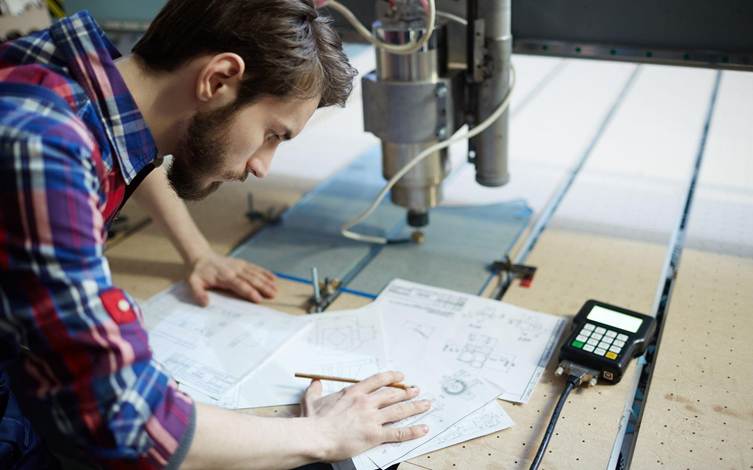
Selecting the right partner for complex machining work requires more than comparing quotes or checking equipment lists. Manufacturers often face delays, inconsistencies, or unexpected costs because early decisions focused on short-term needs rather than long-term fit. These gaps usually appear after production begins, when components must meet tighter tolerances, new materials enter the workflow, or design changes require faster adaptation. Computer numerical control (CNC) machining uses programmed digital instructions to produce precise, repeatable parts, but the full value of these methods depends on choosing the right CNC machine shop. Strong results also rely on precision machining, which ensures every component meets dimensional and surface quality standards. Understanding what teams commonly overlook helps manufacturers make more confident, strategic choices.
1. Capability For Future Scaling
Many manufacturers evaluate machining partners based only on current project volume. They overlook whether the chosen CNC machining shop can support growth, higher output demands, or additional product lines. When scaling becomes necessary, some shops lack the equipment capacity or scheduling flexibility to meet new targets. Evaluating long-term scalability upfront helps avoid production interruptions later.
2. Material Expertise Across Multiple Applications
Different materials require specific cutting tools, feed rates, and machining strategies. Some manufacturers assume every shop performs equally across all metals, but capability varies widely. A partner may excel at aluminum yet struggle with stainless steel or hardened alloys. Precision machining depends on clear expertise in handling varied materials, especially when future design iterations may require different grades or thicknesses.
3. Ability To Maintain Consistency Across Batches
Initial samples often look flawless, but maintaining that quality across ongoing production is a different challenge. Manufacturers sometimes overlook how a shop monitors consistency through tool calibration, inspection routines, or digital measurement systems. A reliable CNC machining shop demonstrates how it tracks variation and ensures stable quality long after the first batch is completed.
4. Communication Speed And Technical Clarity
Smooth production depends on quick feedback regarding design questions, tolerance adjustments, or scheduling concerns. Manufacturers frequently underestimate the impact of communication delays, assuming machining performance alone determines results. Shops that respond slowly or provide unclear explanations create bottlenecks that affect the entire timeline. Strong communication practices matter as much as machining capability.
5. Understanding Of End-Use Requirements
Some machining shops produce parts strictly to drawings without asking about the component’s function, environment, or stress conditions. Manufacturers sometimes overlook the value of a partner who understands real-world application. When a shop considers how the part will be used, whether through precision CNC turning or other methods, machining decisions become more accurate, whether related to material selection, surface finish, or tolerance control.
6. Flexibility During Design Revisions
Design changes are common, especially during early production cycles. Manufacturers sometimes choose partners based only on their machining equipment, ignoring the shop’s workflow flexibility. Some teams struggle to adapt quickly, while others have structured systems for receiving updated drawings, adjusting programs, and communicating lead time changes. Selecting a CNC machining shop that handles revisions efficiently prevents delays and unnecessary costs.
7. Inspection Capabilities Beyond Basic Checks
Quality assurance often receives less attention during the selection process than it deserves. Some manufacturers assume visual checks or basic measurements are sufficient, only to discover later that their application requires more advanced inspection. Shops with coordinate measuring machines, surface roughness testing, or digital reporting capabilities support more accurate documentation and stronger batch reliability. Precision machining depends on verifying results as thoroughly as producing them.
Conclusion
Choosing a machining partner shapes long-term production outcomes, yet important considerations are frequently overlooked during early discussions. Understanding scalability, communication quality, inspection capabilities, and material expertise helps manufacturers avoid costly adjustments later. A CNC machining shop equipped for these needs and supported by precision machining delivers consistent, reliable performance across varied production cycles.
Get in touch with Disk Precision to find out how precision machining and a CNC shop can meet your project’s needs.