
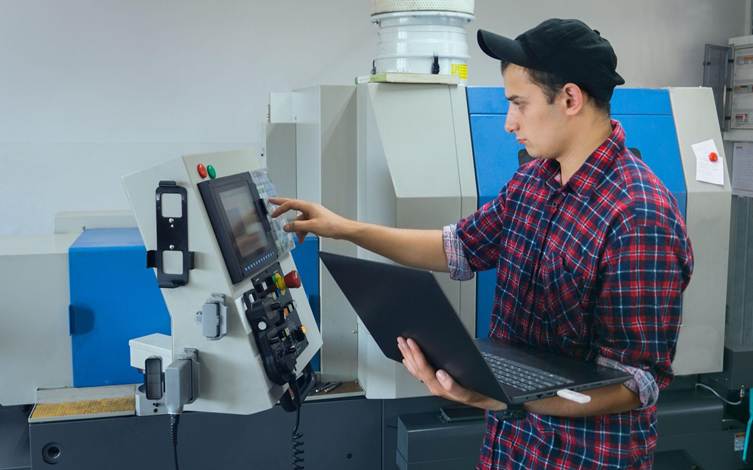
Many production teams today rely on advanced machining processes to meet rising expectations for speed, accuracy, and consistency. Among the various tools used across workshops and factories, the CNC lathe remains one of the most essential. It offers a level of control and repeatability that manual operations simply cannot achieve, making it a core investment for machining manufacturers handling high-precision work.
How a CNC Lathe Works in Modern Production
A CNC lathe, commonly used in CNC turning service operations, operates by rotating a workpiece against a cutting tool, shaping materials into accurate cylindrical or complex profiles. What once required manual adjustments is now driven by programmed instructions, allowing operators to produce identical parts with minimal variation. This ability to automate repetitive turning tasks is what makes the CNC lathe a staple in industries such as automotive, aerospace, electronics, and general engineering. Instead of relying on feel or experience alone, the machine follows precise coordinates, ensuring each cut meets the required specification. Due to this, machining manufacturers can run longer production cycles without compromising on output quality.
Capabilities That Set the CNC Lathe Apart
One of the most valuable strengths of a CNC lathe is its ability to achieve tight tolerances across a range of components. Whether the part requires threading, grooving, tapering, or contouring, the machine handles complex operations with consistent accuracy. This approach reduces the need for additional finishing steps and shortens the overall production timeline. Another capability worth noting is its flexibility. A single machine can be programmed to run multiple part designs in succession, allowing small batches and customised orders to be processed efficiently. The repeatability also means that once a programme is saved, the design can be produced at any time without recalibration. This approach ensures predictable lead times and stable quality control for machining manufacturers that serve clients with recurring orders. Advanced CNC lathe models further support live tooling, enabling drilling or milling without removing the part from the spindle, which cuts down on manual handling and reduces the chance of error. These enhancements are also relevant for manufacturers considering a CNC machine in Thailand, where efficiency and precision determine overall production value.
Why Machining Manufacturers Rely on CNC Lathes
Machining manufacturers depend on CNC lathes because they enhance productivity while reducing operational risks. The automation reduces the likelihood of human error, which is critical when producing parts that must meet regulatory or industry-specific standards. It also allows workshops to run machines for extended hours without fatigue affecting output. Beyond efficiency, cost management plays a significant role. A CNC lathe reduces waste by cutting exactly what is needed, and the programmable nature shortens setup time between jobs. This approach helps manufacturers maintain competitive pricing even when dealing with complex designs. Another factor is workforce development. Modern CNC systems enable operators to monitor multiple machines simultaneously, increasing the output of each shift. This instance is a direct advantage that allows organisations with limited manpower to scale production without proportionally increasing labour costs.
How CNC Lathes Support Future Manufacturing Demands
Since industries continue to push for shorter lead times and greater customisation, the CNC lathe remains relevant due to its adaptability. Software integration, real-time monitoring, and improved tooling technologies ensure that the machine evolves alongside new manufacturing trends. Machining manufacturers that invest in upgraded models often see immediate benefits in faster cycle times, improved accuracy, and better energy efficiency. These gains support long-term competitiveness in a landscape where precision and reliability are non-negotiable.
Conclusion
The CNC lathe stands as one of the most dependable tools in modern production, offering accuracy, speed, and flexibility that align with today’s manufacturing expectations. Its capabilities support a wide range of industries, making it an essential asset for machining manufacturers aiming to deliver consistent and scalable results. While technology continues to advance, the CNC lathe will remain a central element in workshops committed to high-quality output.
Contact Disk Precision Group to upgrade your production workflow today.