
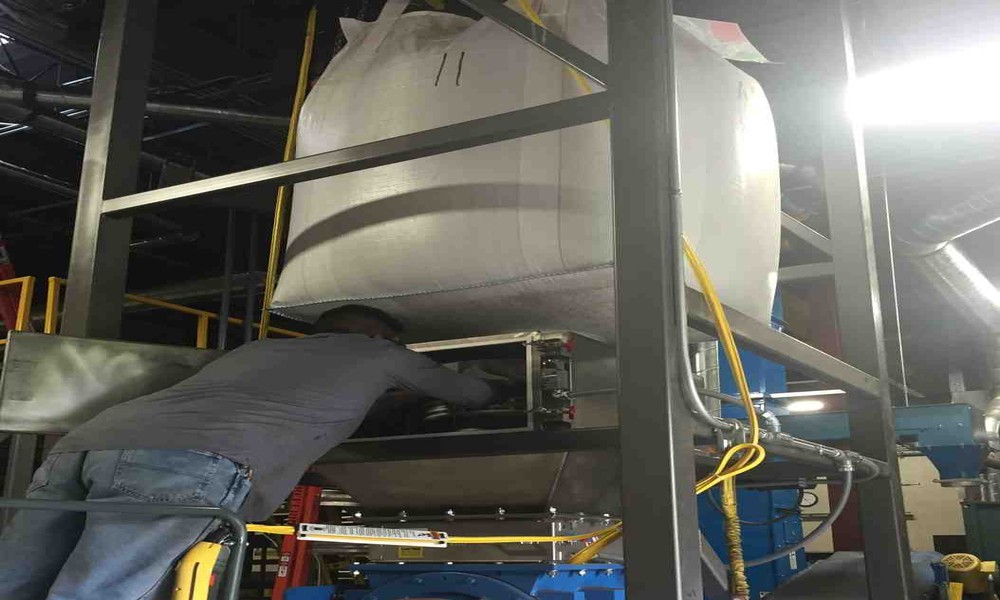
Enhancing Efficiency with Industrial AutomationOvercoming Plant Operational Pain Points with Industrial Automation
Modern manufacturing facilities constantly seek ways to enhance plant performance, minimize errors, and ensure a safer working environment. Many operational pain points in industrial settings stem from outdated material-handling practices, particularly when handling bulk ingredients. Manual processes often lead to batching errors, significant material waste, and serious operator safety concerns, especially due to dust exposure. The heavy reliance on manual labor for repetitive, strenuous tasks also creates dependency issues and limits scalability.
Industrial automation, particularly through the implementation of bulk sack unloaders, directly addresses these challenges. By automating the discharge of materials from Flexible Intermediate Bulk Containers (FIBCs), or “bulk sacks,” companies can significantly mitigate these risks and improve overall efficiency. For a comprehensive understanding of how these systems fit into a larger operational strategy, exploring robust Bulk Bag Handling Systems can provide valuable insights into optimizing material flow from start to finish.
Transitioning from Manual to Automated Batching
Historically, the process of introducing bulk ingredients into a production line involved manually dumping numerous smaller bags. This method is not only labor-intensive and incurring high labor costs but also prone to human error, leading to inconsistent batch quality and increased scrap. Imagine workers repeatedly lifting and emptying 50-pound bags; it’s physically demanding and inherently inefficient.
Automated bulk bag unloaders revolutionize this by providing a controlled, consistent, and much faster method for introducing material. By precisely dispensing ingredients, these systems drastically reduce the potential for batching errors, ensuring greater consistency in product formulation. This transition leads to a notable reduction in material waste and a significant increase in throughput, allowing production lines to operate more smoothly and reliably. The shift from manual to automated bulk bag handling is a clear step towards a more efficient and cost-effective operation. To understand the full scope of these benefits, I highly recommend delving into how industrial automation can unlock efficiency through automated bulk bag unloading.
Optimizing Material Flow with Industrial Automation Systems
One of the most persistent challenges in handling bulk powders and granules is ensuring consistent material flow. Many materials, especially those that are fine, cohesive, or hygroscopic, are prone to bridging or rat-holing within the bulk bag, preventing complete discharge. This leads to residual waste and necessitates manual intervention, which can be unsafe and time-consuming.
Automated bulk bag unloaders are equipped with various flow aids designed to overcome these issues. These can include pneumatic massage paddles that gently compress the sides of the bag, vibratory discharge pans that encourage material movement, or agitators that break up compacted material. These mechanisms ensure a steady, uninterrupted flow of material, maximizing product recovery and minimizing residual waste. The industry benchmark for residual powder waste is often cited as less than 0.3% for high-performing unloaders, a level that manual methods cannot achieve. Effective Bulk Bag Discharging is paramount for maintaining continuous production and reducing costly material loss.
Evaluating Bulk Bag Unloading Technologies
When considering an upgrade to bulk bag unloading, understanding the various technologies available is crucial. These systems are designed to safely and efficiently discharge materials from FIBCs, also known as super sacks or jumbo bags. The choice of an unloader often depends on factors such as available headroom, bag change frequency, and specific material characteristics. Common methods for loading bulk bags onto an unloader include using a forklift, integrating a hoist and trolley system, or utilizing low-profile frames for facilities with height restrictions. Each method offers distinct advantages in terms of ergonomics, safety, and operational speed. For those looking to make an informed decision, a detailed guide on Industrial automated sack unloaders can help navigate the options and identify the best fit for their specific operational needs.
Comparing Loss-in-Weight and Gain-in-Weight Systems
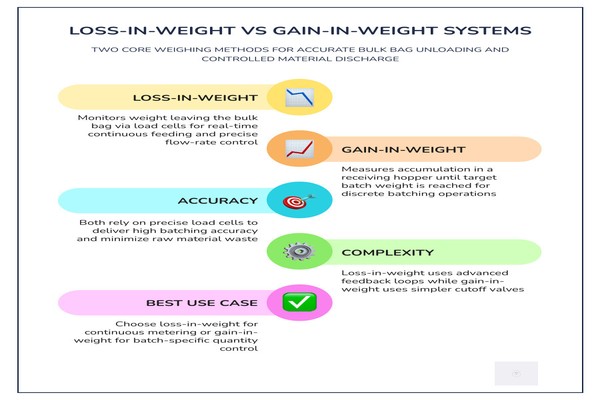
Precision in material handling is often achieved through accurate weighing systems. Bulk bag unloaders can be integrated with either loss-in-weight or gain-in-weight batching systems, each serving different operational requirements.
Loss-in-weight systems continuously monitor the weight of the bulk bag and its contents as material is discharged. This method provides real-time feedback on the amount of material being fed, making it ideal for continuous metering applications where a precise, consistent feed rate is critical. Load cells supporting the unloader measure the decreasing weight, and a control system adjusts the discharge mechanism to maintain the desired flow.
Gain-in-weight systems, conversely, measure the material as it accumulates in a receiving hopper or downstream vessel. The unloader discharges material until the target weight is reached in the receiving container. This method is typically used for batching applications where a specific quantity of material is required for each batch. While perhaps not offering the same continuous control as loss-in-weight, it provides excellent batching accuracy for discrete operations.
Both systems leverage gravimetric feeding principles, relying on highly accurate load cells to ensure precise material delivery. The choice between them depends on whether the application requires continuous feeding (loss-in-weight) or precise batching into a receptacle (gain-in-weight). For a deeper dive into these sophisticated weighing solutions, exploring a dedicated Bulk Bag Unloading and Weighing System resource can be highly beneficial.
Feature Loss-in-Weight System Gain-in-Weight System Measurement Measures material leaving the bulk bag Measures material entering a receiving hopper Application Continuous feeding, precise flow rate control Batching specific quantities into a container Accuracy High for continuous flow and rate High for discrete batch sizes Control Active feedback loop to maintain discharge rate Stops discharge once target weight is reached Complexity Generally more complex control algorithms Simpler control, often uses a cutoff valve Scale Location Unloader frame and bulk bag are on load cells Receiving hopper/scale is on load cells Cost Can be higher due to continuous control requirements Generally lower for basic batching Downtime Requires brief pauses for bag changes Less sensitive to bag change interruptions.
Integrating Downstream Conveying and Feeding Equipment
A bulk bag unloader rarely operates in isolation. Its true efficiency is realized when seamlessly integrated with downstream conveying and feeding equipment. This integration forms a complete material-handling system, ensuring a continuous, controlled flow of ingredients from the bulk bag to the next stage of the process, whether it’s mixing, blending, or packaging.
Common downstream components include:
- Rotary Airlocks: Essential for pneumatic conveying systems, rotary airlocks provide a dust-tight seal while allowing material to pass from a higher-pressure zone (such as the unloader) to a lower-pressure conveying line.
- Screw Conveyors: These versatile conveyors use a rotating helical screw blade within a tube or trough to move granular or powdered materials horizontally, vertically, or at an incline. They are excellent for controlled feeding and transport over short to medium distances.
- Pneumatic Conveying Systems: Utilizing air pressure or vacuum, these systems transport materials through pipelines, ideal for moving materials over longer distances or to elevated points in a facility while maintaining dust containment.
- Vibratory Feeders: These feeders use vibration to move material at a controlled rate, often used for precise dosing into a downstream process or to ensure a consistent flow from a hopper.
The careful selection and integration of these components ensure that the material discharged from the bulk bag unloader is delivered efficiently and without interruption to its intended destination. This holistic approach to system design is critical for maximizing productivity and maintaining product quality. To explore various system configurations and their benefits, reviewing comprehensive Bulk Bag Unloading Systems can be a valuable resource.
Key Selection Criteria for Plant Upgrades
Undertaking a plant upgrade involving bulk bag unloaders represents a significant capital expenditure, and ensuring a strong return on investment (ROI) is paramount. The selection process must be meticulous, considering a range of factors that extend beyond initial cost. At the heart of this decision lies a deep understanding of the materials to be handled. Material characteristics such as bulk density, particle size, flowability, abrasiveness, and hygroscopy (moisture absorption) dictate the necessary features of the unloader, from its construction materials to its flow aid mechanisms. For highly specific applications or unique material properties, a Custom Bulk Bag Unloader might be the most effective solution, tailored to meet precise operational demands.
Retrofitting Legacy Equipment vs Full System Upgrades
When faced with the need to modernize material handling, plant managers often weigh the pros and cons of retrofitting legacy equipment against investing in full-system upgrades. Retrofitting can involve upgrading controls, integrating new PLC systems, or adding modular frames to existing structures. This approach can be cost-effective for facilities with sound underlying infrastructure, minimizing installation downtime and leveraging existing assets. However, system compatibility can be a challenge, and older equipment might not fully support the latest automation technologies or meet current safety standards.
A full system upgrade, while requiring a larger initial investment, offers the advantage of a completely integrated, state-of-the-art solution. This often leads to superior performance, enhanced safety features, and greater scalability for future needs. It allows for optimized layouts, seamless integration with downstream processes, and the implementation of advanced automation from the ground up. The decision hinges on a detailed assessment of the existing infrastructure, budget constraints, desired performance improvements, and long-term strategic goals.
Safety Standards and Dust Containment in Industrial Automation
Operator safety and environmental protection are non-negotiable in any industrial setting, especially when handling bulk powders. Bulk bag unloaders play a crucial role in achieving these objectives by implementing advanced dust containment measures and adhering to stringent safety standards.
Dust-tight seals are a fundamental feature that prevents airborne particulate matter from escaping during unloading. This not only protects operators from inhaling potentially harmful dust but also prevents cross-contamination and maintains a cleaner working environment. Many systems feature integrated dust-collection ports that connect to a central dust-extraction system, further enhancing air quality.
Compliance with regulatory bodies and certifications is also critical. OSHA (Occupational Safety and Health Administration) standards in the United States, ATEX (Atmosphères Explosibles) directives in Europe (for potentially explosive atmospheres), and FDA (Food and Drug Administration) standards (for food and pharmaceutical applications) dictate specific design and operational requirements. These may include explosion-proof components, sanitary finishes, and easily cleanable surfaces. By prioritizing these safety features and certifications, companies ensure a safe and compliant operation. To learn more about specific strategies for mitigating airborne particles, it is essential to explore how to reduce dust in Bulk Bag Unloader environments effectively.
Frequently Asked Questions about Bulk Bag Unloading
As I guide clients through the process of selecting and implementing bulk bag unloaders, certain questions arise consistently. These common queries often touch upon operational guidelines, troubleshooting, and industry benchmarks, reflecting a practical concern for real-world performance and maintenance.
How do automated unloaders prevent material bridging?
Material bridging, where bulk material forms an arch or bridge above the discharge opening, is a common and frustrating issue that can halt production. Automated unloaders employ several sophisticated mechanisms to prevent this. These include:
- Flow Promotion Devices: Often integrated into the unloader, these devices actively encourage material flow.
- Paddle Agitation: Some systems use internal or external paddles that gently massage or agitate the bag, breaking up compacted material and encouraging it to flow downwards.
- Pneumatic Massage: Air cylinders apply pressure to flexible pads on the sides of the bag, effectively “massaging” the material to dislodge bridges and rat-holes.
- Vibratory Discharge: A vibratory motor attached to the unloader frame or discharge hopper provides controlled vibration, helping fluidize the material and ensure a steady flow.
These flow aids are particularly effective for materials prone to caking or those with poor flow characteristics, ensuring a complete and consistent discharge. For challenging materials like clay powder, specialized solutions are often required to maintain flow. You can find more information on handling difficult materials in the context of Clay Powder Bulk Bag Discharge.
What is the typical lifespan and maintenance routine for these systems?
The typical lifespan of a well-maintained bulk bag unloader can range from 15 to 25 years, or even longer, depending on the quality of construction, the abrasiveness of the materials handled, and the intensity of use. Robust units constructed from heavy-duty structural steel are designed for longevity.
Maintenance routines are crucial for ensuring this extended lifespan and consistent performance. A comprehensive preventative maintenance schedule typically includes:
- Regular Inspections: Visual checks for wear and tear on structural components, flow aids, and seals.
- Lubrication: Ensuring all moving parts, such as hoists, trolleys, and agitator bearings, are properly lubricated.
- Wear Parts Replacement: Proactive replacement of components subject to wear, such as flexible seals, gaskets, and agitator paddles.
- Cleaning Protocols: Adhering to strict cleaning schedules, especially for sanitary applications, to prevent material buildup and contamination.
- Calibration: Periodic calibration of load cells and control systems to maintain batching accuracy.
Following these routines not only extends equipment life but also minimizes unscheduled downtime and ensures optimal operational efficiency. Understanding the full lifecycle of material handling equipment, from initial setup to long-term care, is vital. Further insights into managing equipment across its operational phase can be found in discussions around Bulk Bag Handling from Filling to Unloading.
How does automated unloading improve batching accuracy?
Automated unloading significantly enhances batching accuracy through several key mechanisms:
- Precision Controls: Modern bulk bag unloaders are integrated with sophisticated control systems, often PLC-based, that allow for highly precise material dispensing. These controls can adjust discharge rates with fine control, ensuring the exact amount of material is delivered for each batch.
- Weight Transmitters and Load Cells: When integrated with loss-in-weight or gain-in-weight systems, high-resolution load cells and accurate weight transmitters provide real-time weight data. This enables the control system to cut off material flow precisely at the target weight, minimizing discrepancies.
- Minimized Human Error: By removing the manual element, automated systems eliminate inconsistencies caused by human fatigue, mismeasurement, or spills. This leads to much higher repeatability between batches.
- Scrap Reduction: Improved accuracy directly translates into less over- and under-batching, reducing material scrap and optimizing raw material usage. This is particularly important for expensive ingredients.
The precision offered by automated bulk bag unloading systems ensures that each batch meets specifications consistently, leading to higher product quality and significant raw material savings. This level of control is fundamental to modern manufacturing. While the focus here is on unloading, the principles of precision and automation extend throughout the entire material handling chain. For more on the benefits of integrating automated processes, consider exploring the advantages of Automating Bulk Bag Filling to see how precision is applied at other critical stages.
Conclusion
In conclusion, the integration of bulk sack unloaders represents a pivotal step towards enhancing efficiency and safety in industrial operations. These systems effectively address critical pain points, including labor dependency, material waste, batching inaccuracies, and operator safety concerns, particularly related to dust exposure. By automating the discharge of bulk materials, manufacturers can achieve consistent throughput, improve product quality, and significantly reduce operational costs.
Looking ahead, the landscape of bulk material handling is continuously evolving. Emerging trends in bulk bag unloader technology, such as advanced automation and IoT integration, promise even greater efficiencies. IoT-enabled systems, for instance, are enabling real-time discharge analytics, which has been shown in pilot implementations to reduce downtime by as much as 30%. This connectivity allows for predictive maintenance, remote monitoring, and optimized material flow, paving the way for truly intelligent manufacturing facilities.
Embracing these technologies is not merely an upgrade; it’s a strategic investment in plant modernization that yields substantial long-term benefits. For businesses aiming to stay competitive and future-proof their operations, understanding and implementing advanced bulk bag unloading solutions is indispensable. To explore how these systems can transform your material handling processes, I encourage you to delve deeper into the capabilities of modern Bulk Bag Unloading solutions.