
Specialized Corporate and Industry Training ProgramsDefining Specialized Corporate Training vs. Generic Programs
In today’s fast-moving business world, keeping teams skilled and engaged is more vital than ever. Companies face constant change and new challenges. We know that many organizations are worried about employees leaving, with 48% concerned about turnover. This makes effective training a key factor for success and keeping good people.
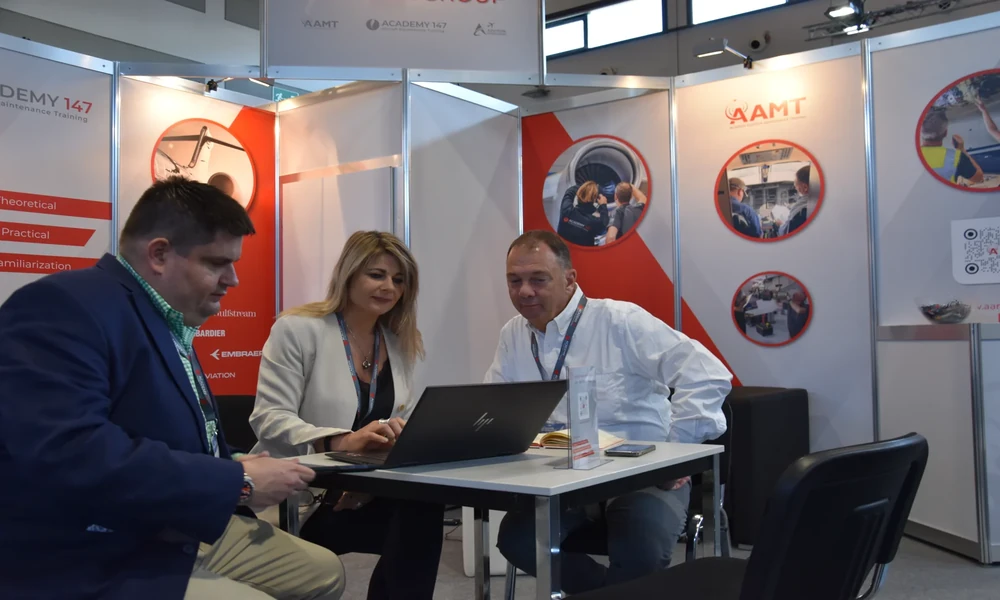
But not all training is the same. “Specialized Corporate Training” goes beyond general programs. It offers focused learning designed for very specific needs and goals. For instance, highly technical fields, like Specialized Corporate Bombardier Maintenance Training, demand very precise and advanced programs to ensure safety and efficiency.
In this guide, we will explore what specialized corporate training truly means and how it differs from standard offerings. We will look at the clear benefits it brings to organizations and how companies can identify their unique training needs. We will dive into the most effective ways to deliver this training, including the role of new technology. We will discuss how to measure success, overcome common challenges, and discover the emerging trends shaping learning in 2026 and beyond. Our aim is to help you understand how targeted training can transform your workforce and drive your organization forward.
Specialized corporate training is a bespoke approach to professional development, meticulously crafted to address the unique challenges, goals, and skill gaps of a particular organization or industry. Unlike generic training programs, which often offer broad, one-size-fits-all content, specialized training delves deep into specific contexts, ensuring relevance and immediate applicability. For example, while a generic course might cover “leadership skills,” a specialized program would focus on “leading cross-cultural engineering teams in the aerospace sector.”
The core difference lies in customization. Generic training often relies on pre-packaged modules, aiming for wide appeal. While these can be useful for foundational knowledge, they often fall short in addressing the nuanced requirements of a dynamic business environment. Specialized programs, however, are built from the ground up, often in collaboration with the client, to align perfectly with their strategic objectives and operational realities. This ensures that every learning outcome directly contributes to the organization’s success. As GLOBIS Corporate Solutions emphasizes, your organization is unique, and your training should reflect that. Their customized programs are designed to avoid the pitfalls of one-size-fits-all solutions.
Distinguishing Features of Specialized Programs
The hallmarks of specialized corporate training include a tailored curriculum, deeply embedded industry-specific context, and the involvement of subject matter experts (SMEs) who bring real-world experience. These programs are often developed through a process of competency mapping, where the required knowledge, skills, and attitudes for specific roles are identified and directly addressed. This level of precision is what differentiates top training companies, allowing them to deliver impactful results.
Organizational Benefits and Talent Retention
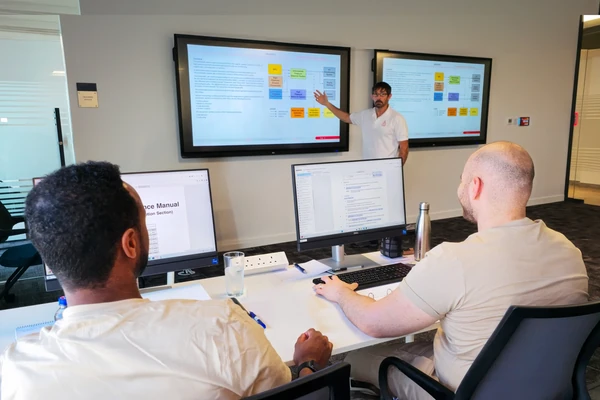
Investing in specialized corporate training yields significant benefits for organizations. Foremost among these is enhanced employee engagement and a direct impact on talent retention. In an era marked by the “Great Resignation,” where 4.5 million Americans left their jobs in November 2021 alone, and over 47 million voluntarily quit in 2021, companies are acutely aware of the need to retain their workforce. A Gartner study revealed that 48% of organizations have significant concerns about turnover. Specialized training acts as a powerful retention tool by demonstrating a tangible investment in employees’ career development and professional growth.
When employees see that their company is committed to providing them with the exact skills needed to excel in their roles and advance their careers, satisfaction and loyalty increase. This targeted development mitigates the risk of employees seeking opportunities elsewhere due to a lack of growth or feeling undervalued. Moreover, specialized training directly addresses skill gaps, leading to improved performance, higher productivity, and a more adaptable workforce capable of navigating industry shifts.
Designing Effective Specialized Corporate Training Programs
Designing effective specialized corporate training programs requires a systematic approach, moving from initial needs identification to robust content creation and delivery. The goal is to create learning experiences that resonate with participants and drive measurable outcomes. The European corporate training market, expected to continue growing through 2030, highlights the increasing demand for sophisticated and tailored learning solutions.
Identifying the Need for Specialized Corporate Training
The first critical step is to accurately identify the specific training needs of the workforce. This is achieved through a comprehensive needs assessment, which often begins with an organizational diagnosis to understand strategic priorities and business challenges. Competency gap analysis helps pinpoint discrepancies between current and desired skill sets. Methods include stakeholder interviews, surveys, performance reviews, and analysis of key business metrics. For instance, if a company is experiencing a high rate of product defects, a specialized training program might focus on advanced quality control techniques or specific machinery operation. Good training, as highlighted in expert insights, must start from measurable business problems, not just available courses.
Delivery Formats and Methodologies
The effectiveness of specialized training is heavily influenced by its delivery format. Modern programs often leverage a variety of methodologies to maximize engagement and knowledge retention:
- Blended Learning: Combines online self-paced modules with in-person or virtual instructor-led sessions. This allows for flexible knowledge acquisition and interactive skill practice.
- Virtual Instructor-Led Training (VILT): Live online sessions that facilitate real-time interaction, discussions, and exercises, ideal for geographically dispersed teams.
- Microlearning: Short, focused bursts of content (often under 15 minutes) designed for quick consumption and reinforcement, perfect for busy professionals.
- In-person Workshops: Provide an immersive, hands-on environment for complex skill development, team-building, and direct interaction with instructors and peers.
- Hybrid Delivery Models: Offer the flexibility for participants to choose between in-person or virtual attendance, catering to diverse preferences and logistical constraints.
Instructional design models like ADDIE (Analysis, Design, Development, Implementation, Evaluation) or SAM (Successive Approximation Model) provide structured frameworks for curriculum development, ensuring that learning paths are clearly defined and aligned with objectives.
Overcoming Implementation Challenges
Implementing specialized corporate training isn’t without its hurdles. Common challenges include managing cognitive load in complex subjects, securing stakeholder buy-in, navigating budget constraints, and effectively managing change within the organization. To overcome these:
- Cognitive Load Management: Break down complex topics into digestible modules, incorporate interactive elements, and provide regular breaks to prevent overwhelm.
- Stakeholder Buy-in: Involve key leaders and managers from the outset, demonstrating how the training directly supports business goals and addressing their concerns.
- Budget Constraints: Explore cost-effective delivery methods like VILT or microlearning, and clearly articulate the potential ROI to justify investment.
- Change Management: Use change management practices to prepare employees for new skills and processes, fostering a receptive learning environment and ensuring smooth adoption.
- Resource Allocation: Ensure adequate time, personnel, and technological resources are dedicated to the program’s success.
The Role of Technology and Compliance in Modern Industry Training
Technology has become an indispensable component of modern specialized corporate training, revolutionizing how content is delivered, consumed, and managed. Simultaneously, navigating complex regulatory landscapes remains a critical aspect, especially in highly regulated sectors.
Balancing Compliance and Skill Development
For many organizations, particularly in fields like aviation, finance, or healthcare, compliance training is mandatory. This often includes topics such as information security, anti-corruption, data privacy, and workplace safety. Companies typically aim for an annual training coverage rate of >= 95% for compliance modules. However, the challenge lies in balancing these essential, often repetitive, compliance requirements with the need for skill development and leadership training that drives innovation and growth.
The solution often involves integrated curriculums and structured learning roadmaps. Compliance training can be delivered efficiently through engaging e-learning modules, freeing up valuable in-person time for more interactive skill development workshops. For instance, a blended approach might combine online modules for general compliance knowledge with in-person simulations for ethical decision-making or leadership scenarios. Utilizing Specialized corporate compliance training resources can help organizations meet these diverse needs effectively.
Aviation and Technical Training Standards
In industries like aviation, the demand for specialized technical training is exceptionally high due to stringent safety regulations and the complexity of equipment. For example, aircraft maintenance requires highly specific training that adheres to international standards. EASA Part-147 approved training ensures that maintenance personnel receive instruction from approved organizations, leading to certifying staff privileges. Similarly, FAA-compliant courses are crucial for professionals operating under U.S. aviation regulations.
These programs often involve hands-on practice, simulator training, and in-depth theoretical knowledge of aircraft systems. For instance, training for specific aircraft types, such as specialized corporate Bombardier maintenance training, goes beyond general principles to cover the intricate details of a particular airframe and its components. This level of specialization is vital for maintaining safety, operational efficiency, and regulatory adherence.
Emerging Trends for 2026 and Beyond
The landscape of specialized corporate training is continuously evolving, with several key trends shaping its future in 2026 and beyond:
- AI-Powered Coaching and Adaptive Learning Paths: Artificial intelligence is increasingly used to personalize learning experiences, offering tailored content and feedback based on individual progress and learning styles. AI coaches can provide real-time guidance, making learning more efficient and effective.
- Microcredentials and Skill Stacking: As the pace of change accelerates, employees need to acquire new skills rapidly. Microcredentials, short-form certifications for specific skills, allow individuals to build relevant competencies quickly and demonstrate their expertise.
- Future-Proofing Skills: With the rise of AI and automation, there’s a growing emphasis on developing uniquely human skills that machines cannot replicate, such as critical thinking, creativity, emotional intelligence, and complex problem-solving. Programs like Dale Carnegie’s “Human by Design: Future-Proofing Yourself in an AI-Driven World” focus on balancing technological advancements with essential human capabilities.
- Immersive Scenario Training (VR/AR): Virtual and augmented reality are creating highly realistic and safe environments for practicing complex tasks, from surgical procedures to aircraft maintenance. This allows learners to gain practical experience without real-world risks.
- Technovate Business Models: Training programs are increasingly integrating technological innovation into business strategy, focusing on digital prototyping, product management, and leveraging data for business model transformation.
Ensuring Long-Term Behavior Change and Performance Improvement
The ultimate goal of specialized corporate training is not just knowledge acquisition but measurable behavior change and sustained performance improvement. This requires a robust framework for evaluation and ongoing support.
Measuring the ROI of Specialized Corporate Training
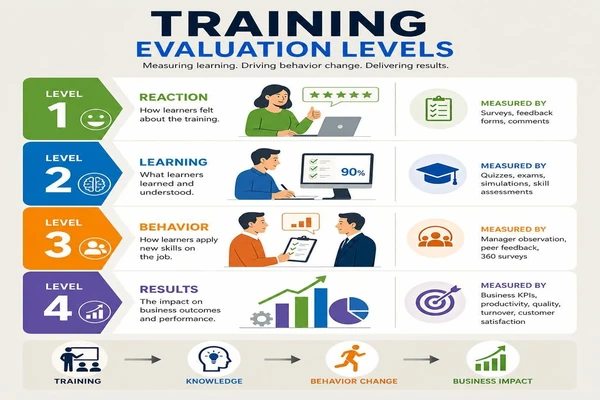
Measuring the Return on Investment (ROI) and effectiveness of specialized corporate training programs is crucial for justifying investment and demonstrating value. We often rely on evaluation models like Kirkpatrick’s Four Levels:
- Level 1: Reaction: Measures learner satisfaction and engagement (e.g., training satisfaction score target of >= 4.5/5.0 and NPS >= 50).
- Level 2: Learning: Assesses knowledge and skill acquisition (e.g., key course exam pass rate target of >= 90%).
- Level 3: Behavior: Evaluates the application of new skills on the job, typically measured at 30, 60, or 90 days post-training through manager observation or behavior-based surveys (target >= 60% behavioral change rate).
- Level 4: Results: Quantifies the impact on business outcomes, such as per-capita productivity, quality yield rate, customer satisfaction, or reduced turnover.
Instead of focusing solely on training metrics, we track these to business metrics to estimate ROI. For high-investment leadership programs, Kirkpatrick Level 3 evaluation should be mandatory, ensuring that real behavioral shifts are occurring.
Kirkpatrick Level Focus Measurement Methods Target Metric (Example) Level 1 Reaction/Satisfaction Surveys, feedback forms, comments Training satisfaction >= 4.5/5.0, NPS >= 50 Level 2 Learning/Knowledge Quizzes, exams, simulations, skill assessments Key course exam pass rate >= 90% Level 3 Behavior/Application Manager observation, peer feedback, 360 surveys Post-training 90-day behavioral change rate >= 60% Level 4 Results/Impact Business KPIs, productivity, turnover, quality rates Increased per-capita productivity, reduced errors
Sustaining Performance and Continuous Learning
To ensure specialized training leads to real behavior change, it must be supported by ongoing reinforcement and a culture of continuous learning. This includes:
- Post-Training Reinforcement: Follow-up coaching sessions, microlearning bursts, and job aids help embed new skills.
- Action Planning: Encouraging participants to create concrete action plans for applying their learning, with regular check-ins.
- Buddy Systems: Pairing learners with mentors or “buddies” who can provide informal support and accountability.
- Organizational Alignment: Ensuring that leadership models, performance management systems, and company culture reinforce the behaviors taught in training.
- Continuous Feedback: Establishing mechanisms for ongoing feedback and performance reviews that specifically address the application of newly acquired skills.
By integrating these elements, organizations can transform isolated training events into sustained learning journeys that drive tangible and lasting improvements.
Frequently Asked Questions
How does specialized corporate training differ from generic professional development?
Specialized corporate training is fundamentally different from generic professional development through its high degree of customization, direct alignment with specific industry needs and organizational goals, and its focus on targeted skill development. Unlike generic programs, which offer broad content, specialized training is designed to solve unique business problems and achieve measurable outcomes, often involving deep dives into industry-specific contexts and leveraging subject matter experts.
What are the most effective methods to measure training ROI?
The most effective methods to measure training ROI involve moving beyond simple satisfaction surveys to evaluate actual behavioral change and business impact. This includes utilizing Kirkpatrick Level 3 evaluation (tracking behavioral shifts at 30, 60, or 90 days post-training), analyzing key business performance metrics (e.g., productivity, sales, quality rates), and calculating the financial return on the training investment. Training satisfaction scores and Net Promoter Scores (NPS) are also important, but they represent only the initial layers of effectiveness.
How can organizations balance regulatory compliance with leadership training?
Organizations can effectively balance regulatory compliance with leadership training by adopting integrated and blended learning approaches. This means leveraging efficient e-learning modules for mandatory compliance topics to achieve high coverage rates, while reserving more interactive, in-person, or virtual sessions for leadership development and complex skill-building. Structured learning roadmaps can integrate both types of training, ensuring that employees meet compliance requirements while also developing critical leadership competencies necessary for strategic growth.
Conclusion
In the dynamic business landscape of 2026, specialized corporate training is no longer a luxury but a strategic imperative. It stands apart from generic programs by offering highly customized, industry-specific, and outcome-driven learning experiences that directly address an organization’s unique challenges and goals. By investing in this tailored approach, companies not only enhance employee skills and performance but also significantly boost talent retention and engagement, crucial factors in mitigating concerns like high turnover rates.
The journey to effective specialized training involves meticulous needs assessment, thoughtful selection of delivery formats-from blended learning to immersive VR simulations-and a proactive approach to overcoming implementation hurdles. Technology, including AI-powered coaching and adaptive learning, continues to redefine possibilities, while stringent compliance requirements, particularly in sectors like aviation, demand precision and adherence to standards. The future of corporate learning is being shaped by trends focusing on future-proofing skills and microcredentials.
The success of specialized training is measured by its ability to drive real behavior change and deliver a tangible return on investment. By implementing robust evaluation frameworks like the Kirkpatrick model and fostering a culture of continuous learning through reinforcement and support, organizations can ensure that their training initiatives translate into sustained performance improvement and a competitive advantage. Embracing specialized corporate training is about strategically investing in your most valuable asset: your people, empowering them to lead your organization into a thriving future.
Sources
About – Specialized Training; Customized Programs | GLOBIS Corporate Solutions; Custom Corporate Training Solutions | Tailored for Business Growth; Corporate Training | Customised Training | In-house | MDC; Enterprise Education for Transformation; Top 10 Corporate Training Companies in the USA; Top Training Companies – Training Industry; Top Corporate Training Companies In Europe – Manage HR Magazine; Europe Corporate Training Market Size 2026-2030 – Technavio; Spearhead Training: Corporate Training Programs Dubai & UAE; Top 12 Corporate Training Companies in Dubai | KHDA Approved